

Expat Mom from the Philippines in Hamburg | IVF, Career & Motherhood in “Later age”
Meet Christina, an expat mom from the Philippines living in Hamburg, Germany with her husband and 4-year-old daughter. She shares more about her journey through IVF, having a child at a “later age”, and how she is balancing career and motherhood.
Tell us about yourself: Hello! I’m Christina, 51, a Filipino-American living in Hamburg, Germany. I’ve been married to my husband, Ryan, for 9 years and we have a 4-year old daughter, Inez. I’m a corporate lawyer by profession (licensed in NY). Before moving to Germany 3 years ago, I was a supervisor and team leader at the legal operations department of one of the largest banks in the US. I now work on legal projects on a freelance basis.
There are two things about me that always fascinate people I just meet: First, that I’m truly a “citizen of the world.” I was born and raised in the Philippines, but have lived, studied and worked in three continents and can speak three languages. Second, that at my age, I know all the songs from Frozen by heart because I’m still raising a 4-year old.

Photo Credit: Mandy Holthues
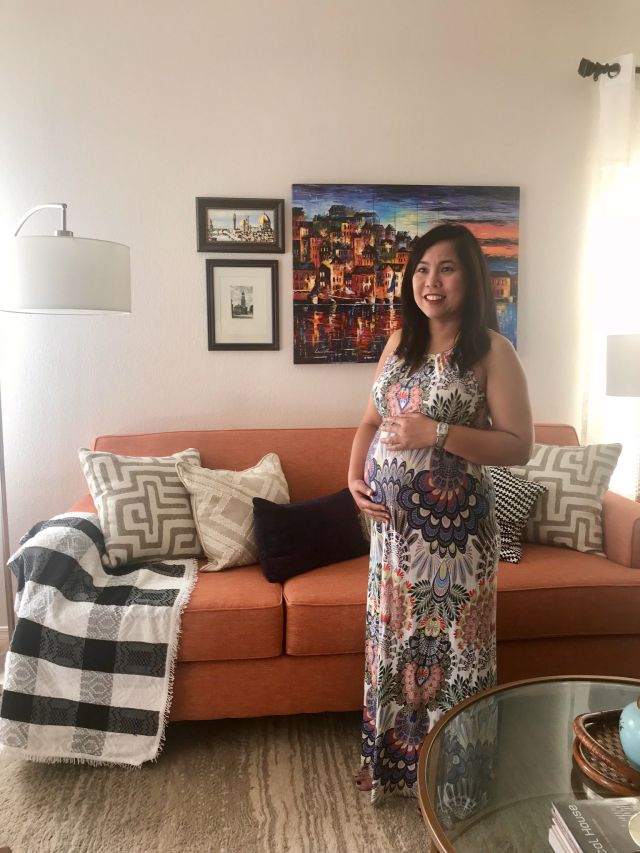
While my friends are posting their kids’ college graduation photos on Instagram, I’m here choosing which Grundschule to send my child to. I focused on my legal career for a very long time that some milestones just came later in life. I married at 41 and gave birth at 46. My daughter turned the life of this ambitious workaholic upside down. And I have never been more grateful.
What brought you to Germany and why did you decide to raise your child abroad?
My family moved from Gilbert, Arizona to Hamburg, Germany in October 2020. Ryan’s employer offered him a more senior position at its Hamburg office, and we accepted it. Honestly, the decision was not that difficult. The US was dealing with political and societal problems, intensified by the pandemic, during the months leading up to our move. It was disheartening.
However, the main reason why we moved was a practical one: Hamburg offers free childcare, education, and healthcare, plus an adequate monthly allowance. We’d rather pay the high taxes in Germany and enjoy all these benefits and more, than pay average taxes in the US and still bear the steep costs of healthcare, childcare, and education.
Don’t get me wrong, I love the US and Germany is far from perfect. But these benefits, together with Ryan’s higher salary and the fact that Hamburg is such a beautiful and family-friendly city, outweighed the cons of relocating. It just made practical sense for us to make Hamburg our new home.
Tell us more about your experience with IVF and the decision to have a child “later” on in life.
Getting married and starting a family was never a priority when I was younger. Back then, I was more interested in closing a deal than finding love. And even after I found love and got married, having a child seemed like a pipe dream. Because of my age, we knew that conceiving naturally wasn’t guaranteed. After some years of trying without getting pregnant, we were disappointed but accepted it without regrets.
There soon came a time, however, when I realized I wanted to be a mother. After “living the same life” for years, I recognized that I was ready to live differently, to start a new chapter. Ryan shared the same feeling. And with that, our IVF journey began.
We did 3 cycles in less than a year. This meant that, for almost a year, my body and sanity endured hundreds of hormone shots and other medications, and dozens of tests, procedures, and trips to the doctor. IVF is so common nowadays that people overlook just how physically and emotionally (and financially!) draining it is.
It turned out perfectly that we had a child later in life. We were already financially stable and had achieved a level of wisdom and experience that kept us mostly calm, clear-sighted and creative as new parents. I was also at a point in my career where I could afford to slow down to focus on motherhood. There were health risks during my pregnancy, but they were mitigated. It’s funny how my doctors would often use the term “geriatric” to describe my pregnancy. All my friends know that there is absolutely nothing geriatric about me.
Photo Credit: Mandy Holthues
What have been the biggest challenges you have faced as an expat mom living in Germany?
They say it takes a village to raise a child, and this is absolutely true. But throughout Inez’s life, the village has always just been Ryan and me. We miss our family and friends in the Philippines and the US, and we regret that, because of the distance, they can’t be more present and share in our lives. My parents, who both cannot travel by plane anymore, only get to see Inez during video calls and when we visit the Philippines. This is the biggest challenge I have as a mom right now: How do I strengthen my daughter’s bond with family who are far away?
Another big challenge is dealing with cultural differences. I thought I “knew” Germany from all the books and documentaries, and those times we visited as tourists. After actually living here, however, I realized I knew zilch (nothing). Several things are so different here, including parenting. My family values are primarily Asian and my generation was raised by helicopter parents. So, every time I pick up Inez from Kita covered in sand or see an 8-year old alone in the train, I try to let go of my Asian sensibilities and remember that this is ganz normal (totally normal) for Germans.
The most frustrating challenge, however, has been the language barrier. **I’ve achieved B1 level and still have a long way to go. Casual conversations with parents or teachers at the Kita can be tough, and even simple phone calls to the doctor’s office can give me anxiety.**My Deutsch (German) has vastly improved in 3 years though. Recently, I had a long discussion in German with a teacher. We understood each other very well. I was skipping all the way home.
How have you been navigating work and parenting?
I do remote, freelance work which allows me to be more flexible with my time and more available for Inez during the day when necessary. The Kita is also less than 10 minutes away from where we live. We don’t have to rush out the door in the mornings or deal with any stressful commute. It all seems ideal but life occasionally throws a curveball. To make things work, Ryan and I divide parenting and household duties almost equally. We also have our mutual calendar sorted out a month in advance, so we know when one is busy or needs to be out.
One important thing we do is make time for ourselves as often as life permits, whether to pursue a hobby, get some exercise, or just explore a new neighborhood. We also use this “free time” to meet up with friends or make new ones. When navigating life in Germany, it helps to have friends to share a laugh with over drinks and a good meal. We now have an amazing community of friends consisting of expats from around the world, Filipinos, and Germans. They are our neighbors, other parents at the Kita, and friends that we’ve met through group chats and even the local Döner shop.

Photo Credit: Mandy Holthues
Any special activities or learning groups for kids in and around Hamburg that you recommend?
We recently joined a Sportverein (Sports Club) and registered our daughter in creative dance and Kinderturnen (children’s gymnastics) classes. I highly recommend these types of classes since my active daughter absolutely loves them. Previously, she attended Musikschule (Music School). For this, I specifically recommend Kindermusik with Karen in Winterhude and Ottensen in Hamburg. Karen is lovely, the classes are in English, and a lot of parents are fellow expats too. I also recommend checking out the activities and events at your local Bücherhalle. We go on Tuesdays.
My favorite thing to do with Inez is meet friends for playdates at home or the playground. We like the Schemmanstraße Spielplatz in Volksdorf, the Piratenspielplatz in HafenCity, the Alstertal Spielplatz in Klein Borstel, and the playgrounds at Stadtpark and Planten un Blomen in Hamburg.
There are also a lot of wonderful activities and places for kids in or around Hamburg depending on the season. Last summer, we went strawberry-picking in Ahrensburg and celebrated our daughter’s birthday at Heide Park in Lüneburg. In autumn, we visited the pumpkin patch at Hof Bartels in Neu Wulmstorf and picked apples in Altes Land.
For tips and news about child-friendly events and places, I follow FB and IG accounts dedicated to these things. My favorite is @Hamburgwithkids on IG. It is run by a mom who focuses on less commercial, more sustainable, activities and places – the account is in English. Other favorites include @HamburgMoms on FB and @Hamburger_Weltentdecker_Kids on IG.
What advice do you have for other new foreign parents living or moving abroad to Germany?
1. Learn German: Most Germans speak English, but they obviously won’t in the supermarket, in school, or among friends, because it’s really just a foreign language to them. They won’t even speak English at the Äusländerbehörde (Immigration Office), where foreigners get their residence permit.
My daughter goes to a bilingual (English-German) Kita, and even there, German is spoken most of the time. These Kitas (nursery schools) are really meant for German kids to learn English and not for kids who already speak the language. It’s best to learn German if you want to participate in school activities and make friends with the other parents.
-
Make Friends: An expat friend has a term for this – “Speed-friending”. It doesn’t matter if you prefer to befriend expats or Germans, or parents or singles, just reach out. It’s easier to navigate life in Germany with the support of friends. Join mom or expat groups on social media; join a Verein (association), a book club or a sports team; volunteer at your child’s school or at church.
-
Explore: Enjoy your new city! Do your research and explore the best playgrounds, kid-friendly cafes, museums, and shops. Take advantage of the “open door days” of Kitas and schools, to help you decide what’s best for your child. Ask friends for tips and advice.
4. Be kind to yourself: Raising a child in a foreign country is challenging, and Germany, for this Filipino-American, can sometimes feel impersonal and isolating. At some point, you will feel lost, lonely, silly. Give yourself grace. Acknowledge that you are doing great because you most likely are. Nothing should stop you from living your best mom life. And this is true regardless of what age you are.
To read more inspiring stories like these, subscribe to our blog today to get the latest expat story straight to your inbox!
expat families abroadexpat parents in Germanyhaving a baby abroadinternational familiesparenting abroad